Back to exercises
StrengthintermediateKettlebells

Lunge Pass Through

Primary
Hamstrings
Secondary
Calves, Glutes, Quadriceps
Equipment
Kettlebells
Level
intermediate

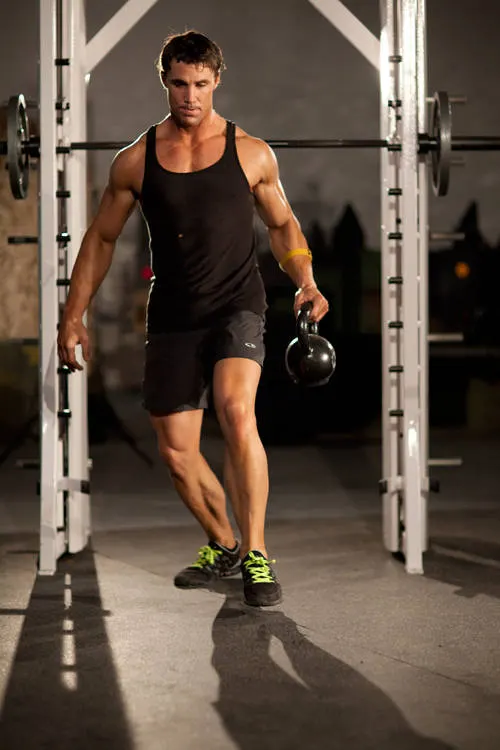
Lunge Pass Through demonstration

Lunge Pass Through, starting position
Lunge Pass Through, finishing position

How to Perform

  1. 1Stand with your torso upright holding a kettlebell in your right hand. This will be your starting position.
  2. 2Step forward with your left foot and lower your upper body down by flexing the hip and the knee, keeping the torso upright. Lower your back knee until it nearly touches the ground.
  3. 3As you lunge, pass the kettlebell under your front leg to your opposite hand.
  4. 4Pressing through the heel of your foot, return to the starting position.
  5. 5Repeat the movement for the recommended amount of repetitions, alternating legs.

Video Tutorial

Tips & Common Mistakes

  • •Focus on controlled movements rather than speed or momentum
  • •Maintain proper breathing - exhale during the exertion phase
  • •Start with lighter weight to master the form before progressing
  • •As a compound movement, this exercise works multiple muscle groups efficiently
Muscles Worked

Front
Back
HamstringsCalvesGlutesQuadriceps

Exercise Details

Category
Strength
Force
push
Mechanic
compound
Level
intermediate

Want workout programs?

Get structured workout plans using this exercise and more.

Browse Programs

Frequently Asked Questions

What muscles does Lunge Pass Through work?

Lunge Pass Through primarily targets the Hamstrings. It also works the Calves, Glutes, Quadriceps as secondary muscles.

What equipment do I need for Lunge Pass Through?

Lunge Pass Through requires Kettlebells.

Is Lunge Pass Through suitable for beginners?

Lunge Pass Through is classified as intermediate level. Beginners should master foundational movements first.

Alternatives to Lunge Pass Through

Substitute any of these when the equipment is taken or unavailable. They train the same primary muscles.