Back to exercises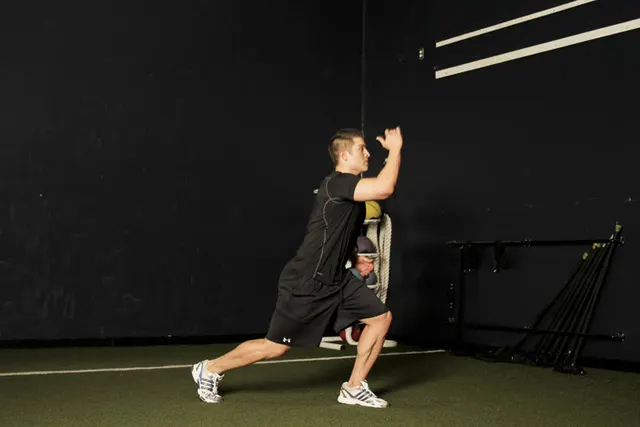
Scissors Jump, starting position 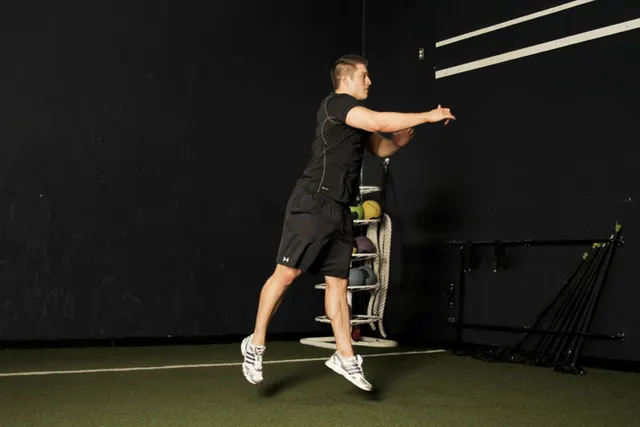
Scissors Jump, finishing position
PlyometricsbeginnerBodyweight
Scissors Jump
Primary
Quadriceps
Secondary
Glutes, Hamstrings
Equipment
Bodyweight
Level
beginner
Scissors Jump demonstration
How to Perform
- 1Assume a lunge stance position with one foot forward with the knee bent, and the rear knee nearly touching the ground.
- 2Ensure that the front knee is over the midline of the foot. Extending through both legs, jump as high as possible, swinging your arms to gain lift.
- 3As you jump as high as you can, switch the position of your legs, moving your front leg to the back and the rear leg to the front.
- 4As you land, absorb the impact through the legs by adopting the lunge position, and repeat.
Video Tutorial
Tips & Common Mistakes
- •Focus on controlled movements rather than speed or momentum
- •Maintain proper breathing - exhale during the exertion phase
- •Start with lighter weight to master the form before progressing
- •This is a great exercise for beginners - focus on form over reps
- •As a compound movement, this exercise works multiple muscle groups efficiently
Muscles Worked
Front
Back
QuadricepsGlutesHamstrings
Exercise Details
- Category
- Plyometrics
- Force
- push
- Mechanic
- compound
- Level
- beginner
Exercise Variations
Frequently Asked Questions
What muscles does Scissors Jump work?
Scissors Jump primarily targets the Quadriceps. It also works the Glutes, Hamstrings as secondary muscles.
What equipment do I need for Scissors Jump?
Scissors Jump requires Bodyweight.
Is Scissors Jump suitable for beginners?
Yes, Scissors Jump is suitable for beginners. It's classified as a beginner-level exercise.
Alternatives to Scissors Jump
Substitute any of these when the equipment is taken or unavailable. They train the same primary muscles.