Biceps, Calves, Glutes, Hamstrings, Lower Back, Middle Back
Equipment
Machine
Level
intermediate
Rowing, Stationary demonstration
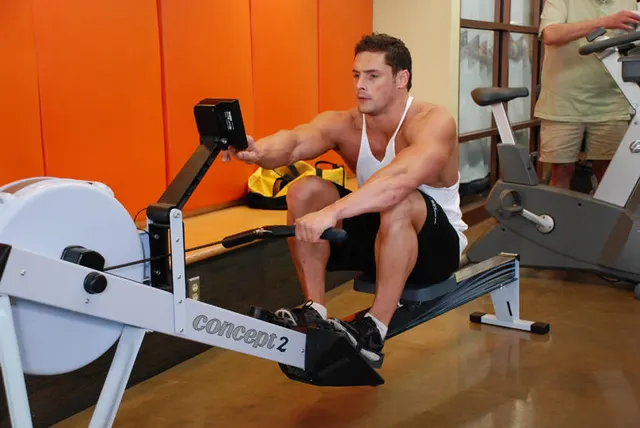
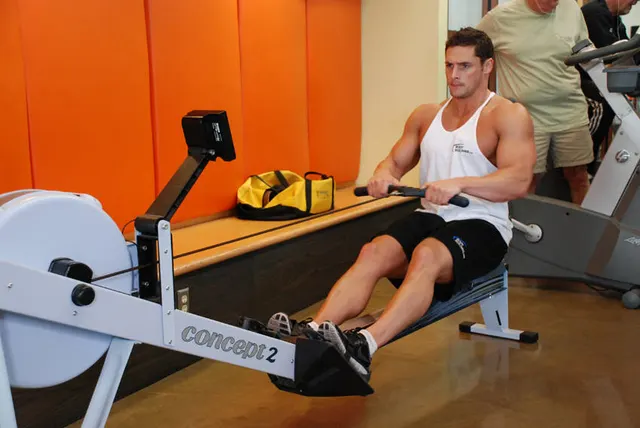
Rowing, Stationary, starting positionRowing, Stationary, finishing position
How to Perform
1To begin, seat yourself on the rower. Make sure that your heels are resting comfortably against the base of the foot pedals and that the straps are secured. Select the program that you wish to use, if applicable. Sit up straight and bend forward at the hips.
2There are three phases of movement when using a rower. The first phase is when you come forward on the rower. Your knees are bent and against your chest. Your upper body is leaning slightly forward while still maintaining good posture. Next, push against the foot pedals and extend your legs while bringing your hands to your upper abdominal area, squeezing your shoulders back as you do so. To avoid straining your back, use primarily your leg and hip muscles.
3The recovery phase simply involves straightening your arms, bending the knees, and bringing your body forward again as you transition back into the first phase.
Video Tutorial
Tips & Common Mistakes
•Focus on controlled movements rather than speed or momentum
•Maintain proper breathing - exhale during the exertion phase
•Start with lighter weight to master the form before progressing
Muscles Worked
Front
Back
QuadricepsBicepsCalvesGlutesHamstringsLower BackMiddle Back
Rowing, Stationary primarily targets the Quadriceps. It also works the Biceps, Calves, Glutes, Hamstrings, Lower Back, Middle Back as secondary muscles.
What equipment do I need for Rowing, Stationary?
Rowing, Stationary requires Machine.
Is Rowing, Stationary suitable for beginners?
Rowing, Stationary is classified as intermediate level. Beginners should master foundational movements first.
Alternatives to Rowing, Stationary
Substitute any of these when the equipment is taken or unavailable. They train the same primary muscles.