Back to exercises
StrengthintermediateDumbbell

Lying Rear Delt Raise

Primary
Shoulders
Equipment
Dumbbell
Level
intermediate

Lying Rear Delt Raise demonstration

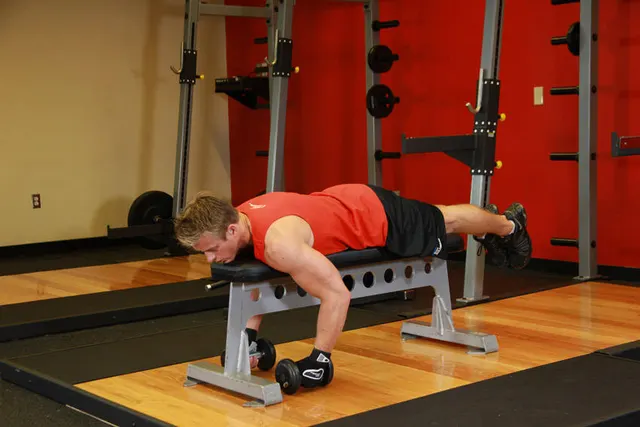
Lying Rear Delt Raise, starting position
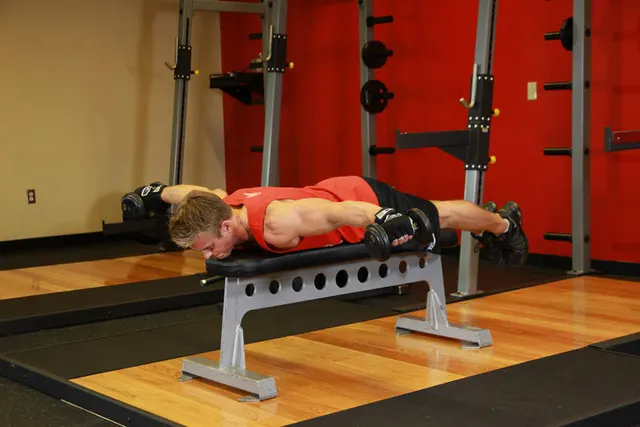
Lying Rear Delt Raise, finishing position

How to Perform

  1. 1While holding a dumbbell in each hand, lay with your chest down on a flat bench.
  2. 2Position the palms of the hands in a neutral manner (palms facing your torso) as you keep the arms extended with the elbows slightly bent. This will be your starting position.
  3. 3Now raise the arms to the side until your elbows are at shoulder height and your arms are roughly parallel to the floor as you exhale. Tip: Maintain your arms perpendicular to the torso while keeping them extended throughout the movement. Also, keep the contraction at the top for a second.
  4. 4Slowly lower the dumbbells to the starting position as you inhale.
  5. 5Repeat for the recommended amount of repetitions and then switch to the other arm.

Video Tutorial

Tips & Common Mistakes

  • •Focus on controlled movements rather than speed or momentum
  • •Maintain proper breathing - exhale during the exertion phase
  • •Start with lighter weight to master the form before progressing
Muscles Worked

Front
Back
Shoulders

Exercise Details

Category
Strength
Force
pull
Mechanic
isolation
Level
intermediate

Want workout programs?

Get structured workout plans using this exercise and more.

Browse Programs

Frequently Asked Questions

What muscles does Lying Rear Delt Raise work?

Lying Rear Delt Raise primarily targets the Shoulders.

What equipment do I need for Lying Rear Delt Raise?

Lying Rear Delt Raise requires Dumbbell.

Is Lying Rear Delt Raise suitable for beginners?

Lying Rear Delt Raise is classified as intermediate level. Beginners should master foundational movements first.

Alternatives to Lying Rear Delt Raise

Substitute any of these when the equipment is taken or unavailable. They train the same primary muscles.