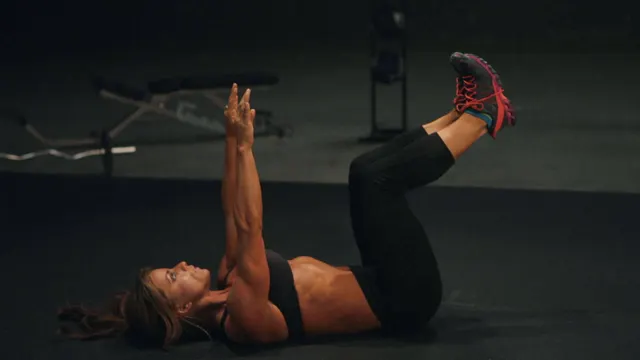
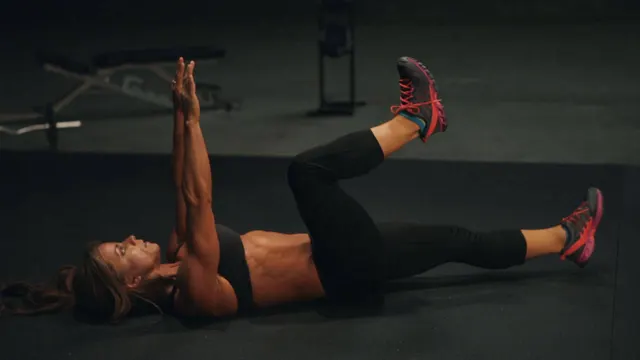
Dead Bug, starting positionDead Bug, finishing position
How to Perform
1Begin lying on your back with your hands extended above you toward the ceiling.
2Bring your feet, knees, and hips up to 90 degrees.
3Exhale hard to bring your ribcage down and flatten your back onto the floor, rotating your pelvis up and squeezing your glutes. Hold this position throughout the movement. This will be your starting position.
4Initiate the exercise by extending one leg, straightening the knee and hip to bring the leg just above the ground.
5Maintain the position of your lumbar and pelvis as you perform the movement, as your back is going to want to arch.
6Stay tight and return the working leg to the starting position.
7Repeat on the opposite side, alternating until the set is complete.
Video Tutorial
Tips & Common Mistakes
•Focus on controlled movements rather than speed or momentum
•Maintain proper breathing - exhale during the exertion phase
•Start with lighter weight to master the form before progressing
•This is a great exercise for beginners - focus on form over reps
•As a compound movement, this exercise works multiple muscle groups efficiently