Back to exercises
Cardiobeginner

Trail Running/Walking

Primary
Quadriceps
Secondary
Calves, Glutes, Hamstrings
Equipment
None
Level
beginner

Trail Running/Walking demonstration

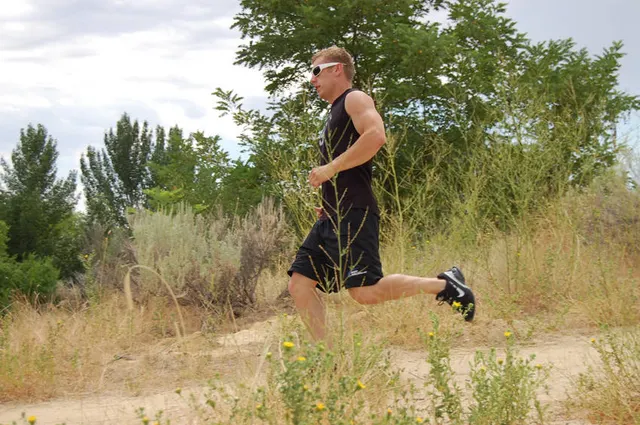
Trail Running/Walking, starting position
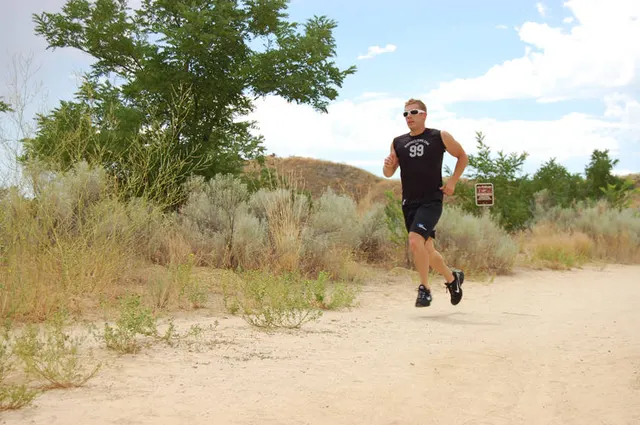
Trail Running/Walking, finishing position

How to Perform

  1. 1Running or hiking on trails will get the blood pumping and heart beating almost immediately. Make sure you have good shoes. While you use the muscles in your calves and buttocks to pull yourself up a hill, the knees, joints and ankles absorb the bulk of the pounding coming back down. Take smaller steps as you walk downhill, keep your knees bent to reduce the impact and slow down to avoid falling.
  2. 2A 150 lb person can burn over 200 calories for 30 minutes walking uphill, compared to 175 on a flat surface. If running the trail, a 150 lb person can burn well over 500 calories in 30 minutes.

Video Tutorial

Tips & Common Mistakes

  • •Focus on controlled movements rather than speed or momentum
  • •Maintain proper breathing - exhale during the exertion phase
  • •Start with lighter weight to master the form before progressing
  • •This is a great exercise for beginners - focus on form over reps
Muscles Worked

Front
Back
QuadricepsCalvesGlutesHamstrings

Exercise Details

Category
Cardio
Force
N/A
Mechanic
N/A
Level
beginner

Want workout programs?

Get structured workout plans using this exercise and more.

Browse Programs

Frequently Asked Questions

What muscles does Trail Running/Walking work?

Trail Running/Walking primarily targets the Quadriceps. It also works the Calves, Glutes, Hamstrings as secondary muscles.

What equipment do I need for Trail Running/Walking?

Trail Running/Walking requires no equipment - it's a bodyweight exercise.

Is Trail Running/Walking suitable for beginners?

Yes, Trail Running/Walking is suitable for beginners. It's classified as a beginner-level exercise.

Alternatives to Trail Running/Walking

Substitute any of these when the equipment is taken or unavailable. They train the same primary muscles.