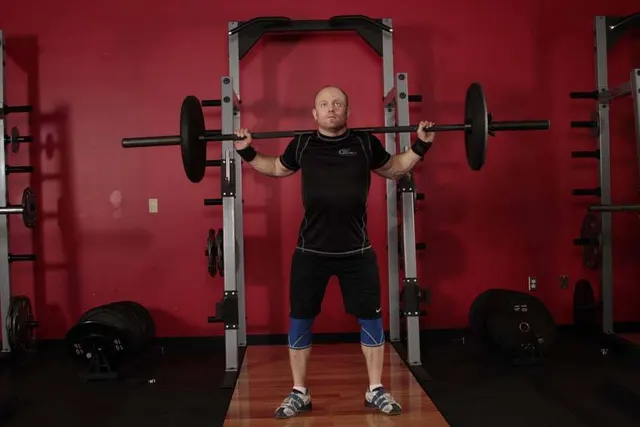
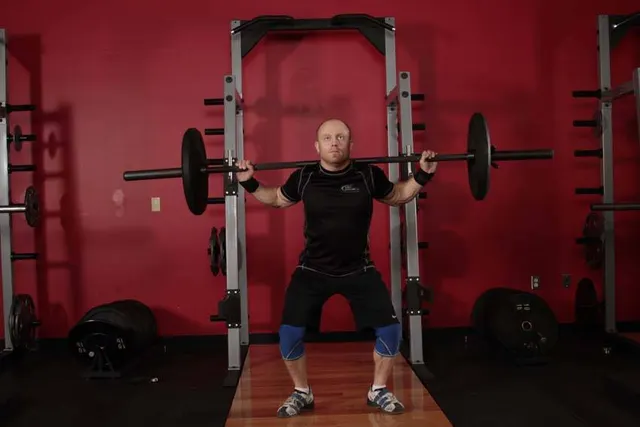
Heaving Snatch Balance, starting positionHeaving Snatch Balance, finishing position
How to Perform
1This drill helps you learn the snatch. Begin by holding a light weight across the back of the shoulders. Your feet should be slightly wider than hip width apart with the feet turned out, the same position that you would perform a squat with.
2Begin by dipping with the knees slightly, and popping back up to briefly unload the bar. Drive yourself underneath the bar, elevating it overhead as you descend into a full squat.
3Return to a standing position.
Video Tutorial
Tips & Common Mistakes
•Focus on controlled movements rather than speed or momentum
•Maintain proper breathing - exhale during the exertion phase
•Start with lighter weight to master the form before progressing
•As a compound movement, this exercise works multiple muscle groups efficiently
Heaving Snatch Balance primarily targets the Quadriceps. It also works the Abdominals, Forearms, Glutes, Hamstrings, Shoulders, Triceps as secondary muscles.
What equipment do I need for Heaving Snatch Balance?
Heaving Snatch Balance requires Barbell.
Is Heaving Snatch Balance suitable for beginners?
Heaving Snatch Balance is classified as intermediate level. Beginners should master foundational movements first.
Alternatives to Heaving Snatch Balance
Substitute any of these when the equipment is taken or unavailable. They train the same primary muscles.