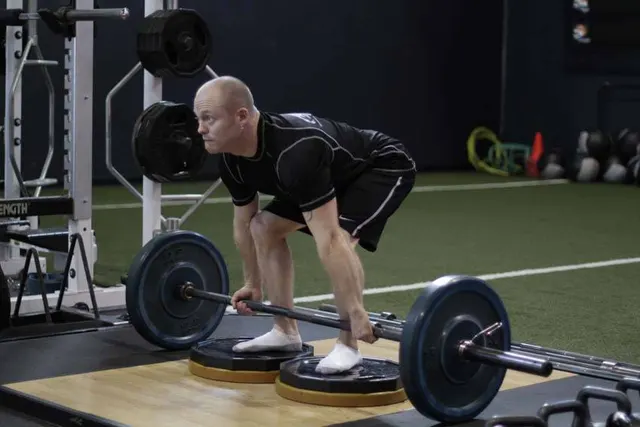
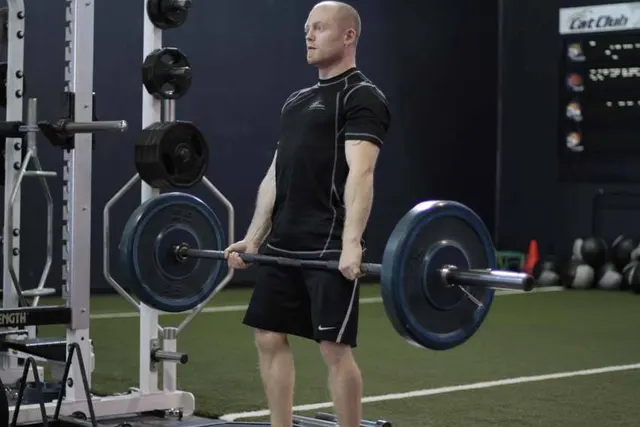
Deficit Deadlift, starting positionDeficit Deadlift, finishing position
How to Perform
1Begin by having a platform or weight plates that you can stand on, usually 1-3 inches in height. Approach the bar so that it is centered over your feet. You feet should be about hip width apart. Bend at the hip to grip the bar at shoulder width, allowing your shoulder blades to protract. Typically, you would use an overhand grip or an over/under grip on heavier sets.
2With your feet, and your grip set, take a big breath and then lower your hips and bend the knees until your shins contact the bar. Look forward with your head, keep your chest up and your back arched, and begin driving through the heels to move the weight upward. After the bar passes the knees, aggressively pull the bar back, pulling your shoulder blades together as you drive your hips forward into the bar.
3Lower the bar by bending at the hips and guiding it to the floor.
Video Tutorial
Tips & Common Mistakes
•Focus on controlled movements rather than speed or momentum
•Maintain proper breathing - exhale during the exertion phase
•Start with lighter weight to master the form before progressing
•As a compound movement, this exercise works multiple muscle groups efficiently
Deficit Deadlift primarily targets the Lower Back. It also works the Forearms, Glutes, Hamstrings, Middle Back, Quadriceps, Traps as secondary muscles.
What equipment do I need for Deficit Deadlift?
Deficit Deadlift requires Barbell.
Is Deficit Deadlift suitable for beginners?
Deficit Deadlift is classified as intermediate level. Beginners should master foundational movements first.
Alternatives to Deficit Deadlift
Substitute any of these when the equipment is taken or unavailable. They train the same primary muscles.