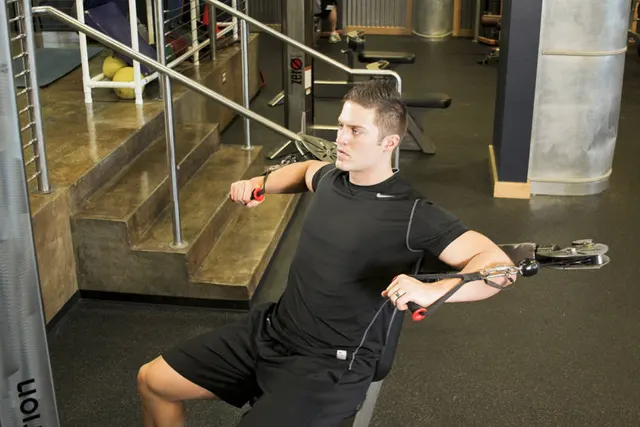
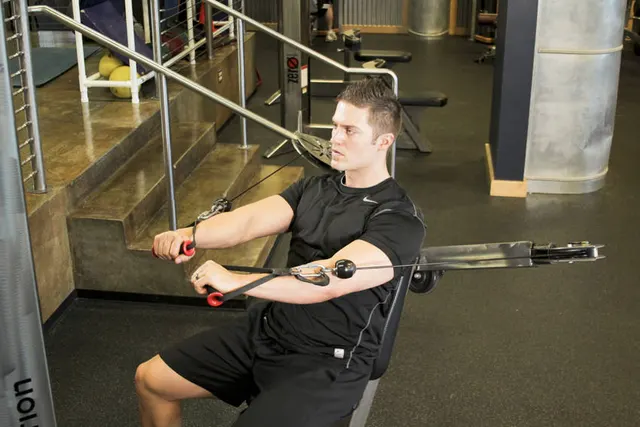
Cable Chest Press, starting positionCable Chest Press, finishing position
How to Perform
1Adjust the weight to an appropriate amount and be seated, grasping the handles. Your upper arms should be about 45 degrees to the body, with your head and chest up. The elbows should be bent to about 90 degrees. This will be your starting position.
2Begin by extending through the elbow, pressing the handles together straight in front of you. Keep your shoulder blades retracted as you execute the movement.
3After pausing at full extension, return to th starting position, keeping tension on the cables.
4You can also execute this movement with your back off the pad, at an incline or decline, or alternate hands.
Video Tutorial
Tips & Common Mistakes
•Focus on controlled movements rather than speed or momentum
•Maintain proper breathing - exhale during the exertion phase
•Start with lighter weight to master the form before progressing
•This is a great exercise for beginners - focus on form over reps
•As a compound movement, this exercise works multiple muscle groups efficiently